My article about accusations against Ron Fields, a former Arkansas attorney general, appears in this week’s Arkansas Times. I welcome your comments.
Read Full Article
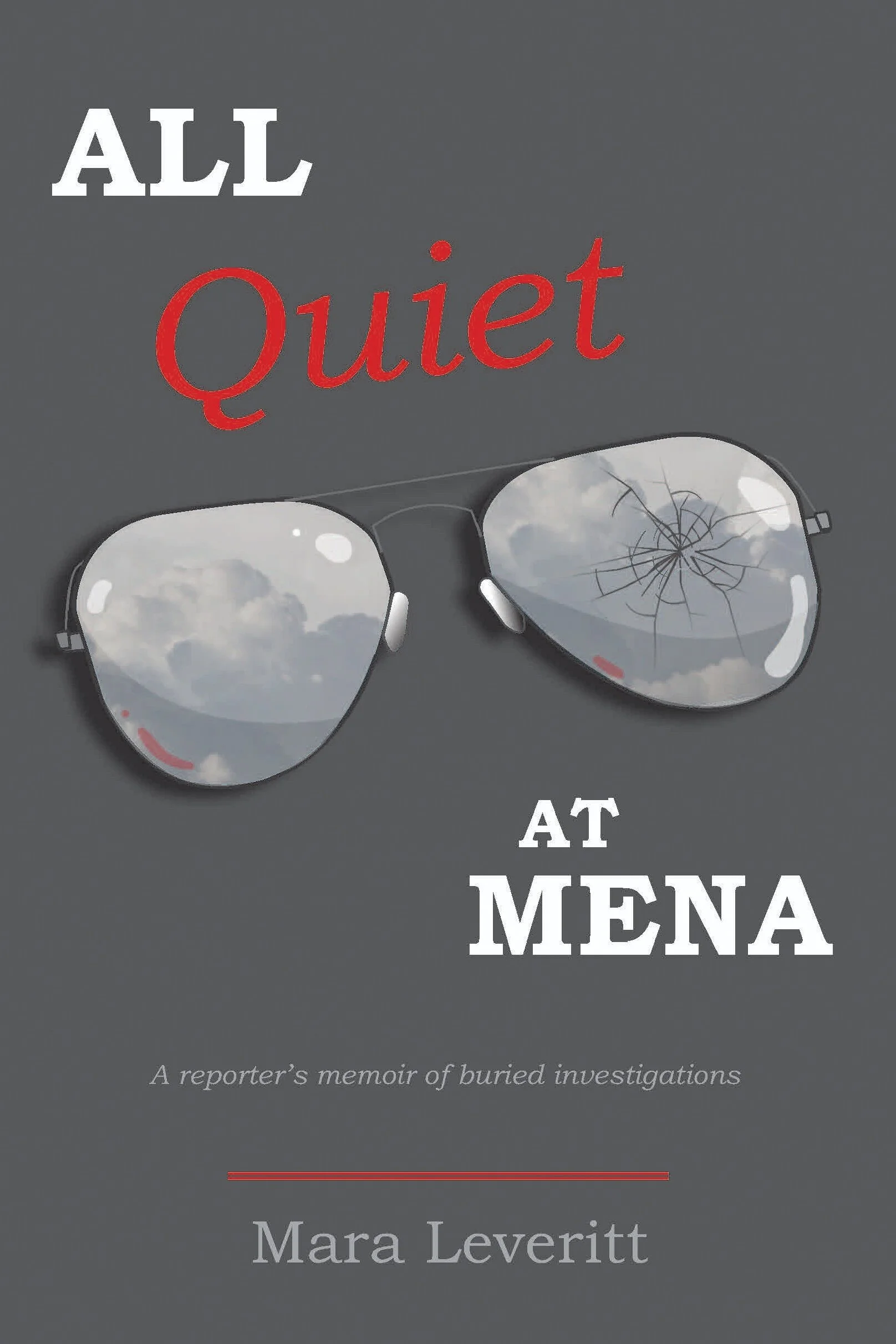
The Boys on the Tracks, my first book dealing with unsolved murders and public corruption in Arkansas, has been out of print for about five years. Now, for the first time, it is available in a trade paperback edition.
The story begins with the deaths of two teenagers in Saline County, Arkansas, an area just south of Little Rock. The medical examiner ruled that they died in the middle of the night from injuries sustained when they were run over by a freight train. The train crew told police that the boys did not stir as the locomotive bore down on them. The medical examiner told the boys parents that this was because both boys had lain across the tracks and fallen into a marijuana-induced stupor.
From that dismal moment on, the story of the investigation into the boys’ deaths took one shocking turn after another. My account of those events is told from the point of view of Linda Ives, the mother of Kevin Ives, one of the two boys who died. At her insistence, a second autopsy was eventually performed. It revealed clear evidence of murder. When a grand jury was impaneled to seek answers, more killing was all that resulted.
I will be signing copies of The Boys on the Tracks and Devil’s Knot at the Hastings bookstore in Benton, Arkansas, the Saline County seat, starting at 10 a.m. on Saturday, Mar. 1, 2008.
Read Full Article
Check out the cover story in this week’s Arkansas Times. It arises from the anguish and controversy surrounding the shooting of 12-year-old DeAunta Farrow (above) by a West Memphis policeman last June. The officer, who is white, claimed that DeAunta, who was black, had a toy gun, which the policeman mistook for a real one. Whether such a gun actually existed remains in dispute. What is not disputable, however, is how clearly the tragedy has revealed the depth of the divide that separates most blacks and whites in Crittenden County.
The article in the Times traces the county’s saga of racial injustice back a century and a half. For the most part, it’s an ugly story. One episode involves Julian Fogleman, a relative of John Fogelman, who in more recent times served as an assistant prosecutor at the trials of the West Memphis Three. In 1963, Julian Fogelman was an assistant prosecuting attorney, when Arthur Lee Anderson, an unarmed, black, 16-year-old boy, was shot in the back by a man who believed the boy had raped his daughter. According to the article by Grif Stockley:
“A coroner’s jury composed of 19 white men took testimony the next day and concluded that the shooting had been justified under Arkansas law. Julian Fogleman … closed the investigation and stated, “We think we have brought all the witnesses before the coroner’s jury and exposed all the facts. We don’t think the decision was wrong and don’t plan to go further with it.” Stockley also noted that, “according to the coroner’s report, Anderson did not rape or physically injure the girl.” And he added, “One would have to be from another planet to believe that if Anderson had been white he would have been chased down and shot from behind.” I would add that it defies the imagination to think that, if Anderson had been white, a prosecutor would have opted “not to go further” with an investigation.
Sadly, it is part of our heritage in this state—and in this country—that race and class converge. My own view is that color is often a diversion from the real issue, which is power—and the desire to maintain it at all costs. In east Arkansas, power has been in the hands of wealthy white people for a long time. Blacks and poor white people have been the powerless. This is where I believe this week’s story in the Arkansas Times informs the case of the West Memphis Three. Damien, Jason and Jessie are white, but more importantly, they were also poor, and they came up against a power establishment that needed a solution to an unsolved triple-murder case, and needed one quick, lest its authority in any way be weakened. By now, all levels of state government have joined in on the perceived need to support the verdicts. But, as this nation’s civil rights struggle has taught us, just because officials dig in their heels does not make their stance correct.
Read Full Article
Arkansas Times editor Max Brantley posted an item critical of Attorney General Dustin McDaniel on the paper’s blog this morning. Here’s what Brantley wrote:
Don’t confuse him with the facts
“Attorney General Dustin McDaniel has made it clear he’s not open to reason in the case of the West Memphis Three convictions. Not surprising. The necktie party built on bogus Satan hysteria that led to their convictions was deeply rooted in the Northeast Arkansas legal establishment from which he sprang. Friends and allies were part and parcel of it.
“But he offered a straw man argument yesterday. Nobody directly invovled in the case has said DNA evidence exonerates anyone. But they have said new inspection finds not a speck of DNA from the convicts at the crime scene, but unexplained DNA from unknown others. It’s a significant development and important, had it been available at trial, in the standard of proof necessary for a conviction. Disappointing. Not surprising.”
This afternoon, McDaniel responded. Here’s what he wrote to the Times:
“I read your blog entry. It is not accurate for you to suggest that I am not open minded or interested in facts. I said very clearly in today’s paper that if anyone presented me with compelling scientific evidence of their actual innocence, I would lead the charge to the Governor’s door seeking pardons. No such evidence exists, and it is a complete falsehood to suggest otherwise.
“There has been new DNA testing of old evidence, but it does not get close to exonerating the defendants. Furthermore, it does not inculpate anyone else. A very small hair in a child’s shoelace that does not exclude (nor definitively identify) his stepfather is the crux of the “new DNA evidence.” I hugged my daughter when I dropped her off at school. It is very possible that my hair could now be found on her scarf. Most parents can understand that. The other hair that has been recently tested was found in the area of the crime scene (not on any one of the bodies) 30 days after the bodies had been recovered. This was, of course after press, police, and dozens of people had been there. That hair did not exclude, nor did it positively identify, a man who was part of the search party with many others looking for the bodies. That’s it. That is the extent of the “new DNA evidence” we have now. There may be more to come, and I will be very open-minded to anything that comes in.
“It is not insignificant, however, that Echols and Baldwin both confessed to the murders more than once each to multiple people in compelling detail. Echols described the mutilation to detectives before that information was publicly released. Echols parents had him institutionalized because they were afraid not only that he was going to kill them, but the other children in the house. Echols was linked to the crime scene by fiber evidence from his clothes. Baldwin, more than once and without leading questions or coaxing from police, described in detail how they removed the skin from Christopher Byers’ penis and scrotum, sucked the blood from the little boy’s penis and scrotum, swallowed his testicles and watched him bleed to death.
“Do you really think they were convicted because they wore black? Do you think their confessions, the knife that matched the wounds, their unique knowledge of the crime, the fiber evidence, and the eye witnesses who saw them near the scene at the time of the murders should be ignored (then or now)?
“Logic is out the window for those who are obsessed with this case, but I am driven only by facts, evidence and justice. I had no part in prosecuting these defendants, and I would have not one minute’s hesitation in leading the charge to release any wrongfully convicted person. However, simply because a website says someone is wrongfully convicted does not make it so. Simply because a defense lawyer (which I once was myself) insists, “my client is innocent,” does not make it so.
“You said I am not open to facts. The only ones twisting the facts are those who say the following: “new DNA evidence proves innocence of WM3.” That is a completely dishonest statement. I wish that conclusive DNA evidence one way or the other did exist. However, without it, the totality of the evidence that was considered by the jury must be given weight.
“I only offer this in defense of the many honest, honorable people who are working on this case. They are open minded, justice minded and diligent.”
My reaction: Mr. McD, if you intend to dare to claim that you are “driven only by facts, evidence and justice,” you’d better get your facts straight.
Read Full Article